Wordle Today: Hints and Answer for September 15, 2026 as Puzzle 1914 Deals Players a Whole Tricky Hand
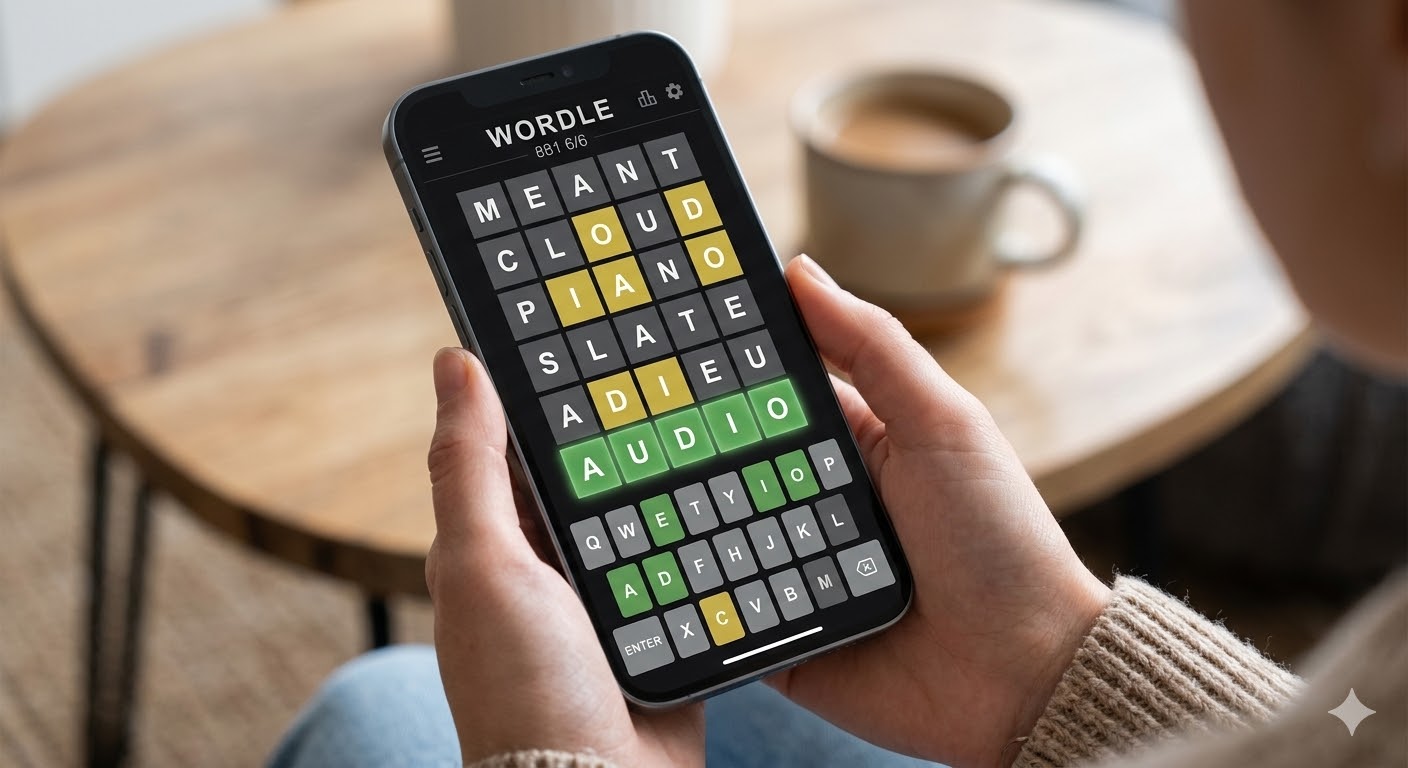
Wordle players faced puzzle number 1,914 on Tuesday, a five-letter word that tripped up some solvers with its unusual past-tense construction even as its individual letters ranked among the most common in the English language.
For those looking to solve the puzzle on their own before seeing the answer, several hints circulated Tuesday to help point solvers in the right direction without giving away the word outright. The word can describe something that has been handled, distributed or given out, and it is commonly associated with cards in a game. It can also describe how someone has managed or responded to a situation, and it functions as the past tense of a common action involving giving or distributing something. In terms of letter composition, the word contains two vowels and no repeated letters, and it begins with the letter D.
SPOILER WARNING: Today's Wordle answer follows below. Stop reading now if you'd rather solve the puzzle without assistance.
The answer to Wordle #1,914 for September 15 is DEALT, the past tense of deal. Despite using letters that appear frequently across the English language, several outlets covering the daily puzzle noted that the word's irregular grammatical structure added a layer of difficulty for some players Tuesday. Rather than following the more common -ed pattern used by most English past-tense verbs, dealt retains an older Germanic construction ending in a hard -t sound, a pattern shared by other irregular verbs such as felt and knelt.
That etymological quirk traces back to the word's origins. Deal, in the sense of distributing or dividing something, descends from the Old English word daelan, meaning to divide, distribute or share, which itself evolved from the Proto-Germanic term dailijaną. Linguists who study English verb patterns point to dealt as an example of how certain irregular past-tense forms have persisted across centuries of language change, even as the vast majority of English verbs shifted toward the more regular -ed ending over time.
Despite that historical complexity, puzzle trackers described Tuesday's word as falling on the easier end of the difficulty spectrum overall, largely because of how frequently its five component letters appear across common English words. Solvers using traditional high-frequency opening guesses, words like SLATE, LATER, STARE or ALTER, would have had a strong chance of identifying at least one or two correct letters early in the process, according to strategy guides published alongside the day's hints. The main challenge, according to those same guides, came not from unusual letters but from the somewhat uneven internal structure of the word itself, which could complicate narrowing down the correct letter placement even after identifying which letters belonged.
Puzzle number 1,914 continued a stretch of daily words that has kept Wordle's dedicated player base engaged more than four years after the game first gained widespread popularity. The puzzle, now owned and published by The New York Times, releases a new five-letter target word globally at midnight local time each day, giving players six total guesses to identify it, with the game providing color-coded feedback after each attempt: green for letters in the correct position, yellow for correct letters in the wrong position, and gray for letters that don't appear in the word at all.
Tuesday's puzzle followed Monday's word, RINSE, continuing a run of daily answers that puzzle trackers use to help players spot broader patterns in how the game's word selection tends to rotate between more and less common vocabulary from one day to the next. Players tracking their personal statistics through Wordle's built-in results screen, or through the game's analytical companion tool, Wordlebot, can compare their own guess efficiency against the average number of attempts other players needed to reach Tuesday's answer.
For players who prefer an extra challenge, Wordle also offers a Hard Mode setting, which requires any previously revealed correct or partially correct letters to be reused in subsequent guesses, removing the option to test entirely fresh combinations of letters once useful information has already been uncovered. Players can toggle that setting from the game's settings menu before beginning a new puzzle.
Beyond the daily Wordle puzzle itself, The New York Times has continued to expand its portfolio of daily word and logic games in recent years, including Connections, a category-sorting puzzle, and the Mini Crossword, a condensed version of the newspaper's traditional crossword format designed to be completed in a few minutes. Other publishers have released their own crossword offerings as well, including the Los Angeles Times and The Atlantic, giving daily puzzle enthusiasts an expanding menu of options beyond Wordle's single daily word.
With Wordle's answer now revealed for September 15, players who came up short on Tuesday's puzzle, or those looking to keep an active streak going, will have a new five-letter word to test their vocabulary against when the next puzzle resets at midnight.
Source: https://www.ibtimes.com.au/wordle-answer-puzzle-1914-dealt-1875560